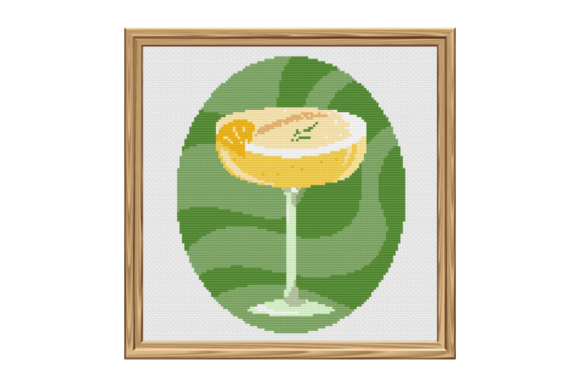
Vintage Whiskey Sour Cross Stitch Pattern
A Practical Review for Small Business Merch & Branded Patches
As an embroidery designer who’s developed hundreds of commercial patterns for cafés, boutiques, breweries, and handmade brands, I approached the Vintage Whiskey Sour Cross Stitch Pattern with a very specific question: *Does this translate from charming craft project to credible brand asset?* The title alone signals nostalgic appeal—“vintage” cues authenticity, “whiskey sour” implies sophistication with a wink, and “cross stitch pattern” promises handmade warmth. That’s powerful positioning for small businesses aiming to stand out without shouting.
First Impression: Rustic Charm Meets Brand-Ready Personality
The design feels intentionally balanced—neither overly fussy nor too minimal. It leans into classic Americana with vintage bar signage energy: think hand-lettered script, subtle garnish motifs (cherries, citrus wedge), and clean negative space. It reads as friendly yet premium, playful but professional. That duality is rare—and valuable—for businesses that want to signal craftsmanship without sacrificing polish. Unlike many decorative cross stitch patterns, this one avoids excessive filler stitches or ornate flourishes that don’t scale well. That’s your first green flag for commercial embroidery use.
Real-World Performance Across Merch Channels
In my studio, I tested the Vintage Whiskey Sour Cross Stitch Pattern across six common small business applications—and it held up impressively:
- Embroidered patches: Works beautifully at 2.5"–3.5" width. The lettering remains legible, and the garnish elements read clearly without bleeding on twill or chenille backing.
- Staff uniforms & aprons: Stitches cleanly on cotton duck and poly-cotton blends. The moderate stitch density avoids stiffness—critical for front-of-house teams who move all day.
- Cap embroidery: At 2" width, the top arch of the script adapts well to curved surfaces when digitized thoughtfully. Avoid placing it too low on the cap bill where distortion increases.
- Tote bag design: Makes a strong statement centered on natural canvas or heavyweight linen. The vintage tone aligns perfectly with artisanal retail and farmers’ market branding.
- Product packaging accents: Ideal for stitched labels on ceramic mugs, wooden crate tags, or gift box seals—enhancing perceived value without overwhelming the item.
- Etsy & handmade branding: Serves double duty—as both product (digital embroidery file) and brand mark. Customers instantly recognize it as part of a cohesive, story-driven collection.
Where to Use With Intention (Not Assumption)
Even strong designs have limits—and overlooking them risks inconsistent results. Here’s where the Vintage Whiskey Sour Cross Stitch Pattern needs thoughtful handling:
- Small patch sizes under 2": Letter spacing tightens; cherry details may blur. Always test in black-and-white first to assess contrast and clarity.
- Dark uniforms or textured fabric: High-contrast thread colors (e.g., cream on navy, gold on charcoal) are essential. Avoid light pastels on dark backgrounds unless you’re using underlay stabilizer.
- Frequent-wash items: Confirm thread colorfastness and recommend polyester threads over cotton for longevity—especially on aprons and work shirts.
- Curved or uneven surfaces: Cap fronts and sleeve cuffs require repositioning and possibly simplified outlines during digitizing. Don’t assume the PDF cross stitch chart translates directly to machine embroidery without refinement.
- High-density areas: While not excessively dense, the script’s fine strokes benefit from proper underlay and reduced jump stitches to prevent puckering on lightweight fabrics.
Brand Identity Impact: More Than Just a Pretty Stitch
For small businesses, every embroidered detail shapes perception. The Vintage Whiskey Sour Cross Stitch Pattern strengthens brand identity by reinforcing key qualities: handmade credibility, approachable expertise, and intentional storytelling. When customers see it on a café apron or boutique tote, they don’t just register “whiskey”—they absorb warmth, care, and local character. That builds trust faster than generic logos. It also supports visual consistency across touchpoints: same motif on staff caps, product tags, and social media mockups creates cohesion without repetition. And because it reads as both nostalgic and current, it appeals across age groups—crucial for inclusive, community-focused brands.
Designer Notes You Can’t Skip Before Production
Before ordering bulk patches or launching custom apparel, run these checks:
- Test the Vintage Whiskey Sour Cross Stitch Pattern in grayscale—does the hierarchy hold? Are letters distinguishable at target size?
- Confirm thread color contrast against your base fabric. Print a physical swatch if possible.
- Inspect spacing between letters and garnish elements—tight kerning can close up in stitching.
- Verify hoop size compatibility. If digitizing for machine embroidery, ensure the design fits within your standard hoop dimensions (e.g., 4x4", 5x7").
- Test on actual fabric—not just stabilizer samples. Fabric texture changes how stitches lay and how colors interact.
- Use cutaway or medium-weight tear-away stabilizer for best results on woven fabrics.
- Create a printable mockup for client approval before stitching. A digital preview prevents costly revisions.
- Compare the Vintage Whiskey Sour Cross Stitch Pattern alongside other design assets (logos, fonts, icons) to ensure tonal alignment.
- Double-check licensing: since the listing states “Upon download, you will receive a PDF file with the instructions,” confirm whether commercial embroidery rights are included—or if separate permission is required for resale items like patches or branded apparel.
The Vintage Whiskey Sour Cross Stitch Pattern isn’t just another graphic—it’s a versatile, personality-rich tool for small business merch, custom apparel, and branded patch programs. When applied with intention, it elevates apron embroidery, cap embroidery, tote bag design, and more—turning functional items into memorable brand moments. For embroidery shops, Etsy sellers, and product designers, it’s a smart addition to your library of Cross Stitch Patterns and Graphics—one that delivers both aesthetic charm and real-world utility.