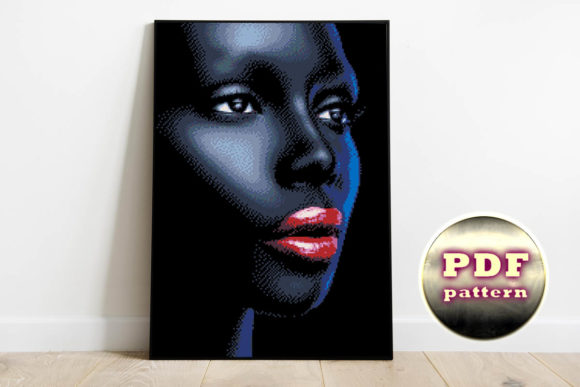
African Woman Cross Stitch Pattern - Art
As an embroidery seller who’s curated over 200 cross stitch patterns for Etsy and small-batch home decor lines, I approached the African Woman Cross Stitch Pattern - Art with both creative curiosity and commercial caution. This isn’t just another digital download—it’s a culturally resonant design that lands squarely at the intersection of artistry, representation, and market readiness. Let’s break down why it stands out—and how it fits into real-world product planning.
A Bold, Elegant Statement—Not Just “Cute” or “Trendy”
The African Woman Cross Stitch Pattern - Art reads as bold yet deeply elegant. It’s not playful or minimalist; it’s intentional, dignified, and visually grounded. With 18 carefully selected thread colors and a generous 150w × 225h stitch count on 14-count Aida, it carries weight without overwhelming. That balance makes it ideal for premium handmade products—not craft fair impulse buys, but considered purchases: framed wall art, heirloom baby blankets, or boutique aprons meant to be displayed, not tucked away.
It leans modern in composition but avoids fleeting trends. The subject is centered, serene, and richly detailed—ideal for customers seeking meaningful Black art decor that honors identity, heritage, and craftsmanship. For Etsy sellers building a cohesive brand around intentionality and cultural authenticity, this pattern adds immediate credibility.
Where This Design Truly Shines in Product Development
I tested the African Woman Cross Stitch Pattern - Art across several physical formats before finalizing listings—and here’s where it delivered strongest:
- Tote bags & aprons: Stitched cleanly on natural linen or medium-weight cotton canvas, the design holds clarity even at reduced scale. Its vertical orientation (27.21w × 40.82h cm) suits tall tote panels and full-front apron placements beautifully.
- Baby blankets & pillow covers: At 14-count Aida, the finished piece has gentle texture and soft definition—perfect for nursery decor that feels warm, not clinical. The color blocks translate well to variegated floss or tonal blends for a hand-stitched heirloom feel.
- Embroidered patches & caps: While originally designed for hand stitching, the clean line work and distinct color separation make it highly adaptable for small-batch machine embroidery—especially when resized thoughtfully and stabilized properly.
- Personalized gifts: Pair it with a custom name or date in complementary cross stitch script below the portrait, and you’ve got a standout bridal shower or graduation gift. Its timeless quality ensures longevity beyond seasonal gifting cycles.
Commercial Value You Can Build On
For craft business owners, the African Woman Cross Stitch Pattern - Art supports more than one-off items—it fuels scalable product systems. Use it as the anchor for a “Black Art Collection” across your shop: matching kitchen towel sets, embroidered sweatshirt backs, and printable mockups for social media previews. Its strong visual identity means customers instantly recognize your aesthetic—even across different categories.
Photographing the finished piece is straightforward: the contrast between white fabric and rich color blocks creates crisp thumbnails, and the 40.82cm height gives ample room for lifestyle shots (e.g., draped over a woven basket or pinned beside botanical prints). That visual consistency helps boost click-through rates and improves Etsy search relevance for terms like “Black art decor,” “African cross stitch,” and “handmade wall art.”
Practical Seller Notes Before You List
Before adding the African Woman Cross Stitch Pattern - Art to your shop, do these five things:
- Stitch a sample first. Test readability at actual size—especially facial features and hair detail. Confirm that all 18 colors render distinctly under natural light.
- Photograph on real fabric. Don’t rely on digital mockups alone. Capture it stitched on your intended base (e.g., oatmeal linen for aprons, white Aida for framed art) to assess true tone and texture.
- Compare thread options. Some palettes shift dramatically between DMC and Anchor floss. Swatch key tones—especially skin and garment shades—to avoid unintended warmth or coolness.
- Check thumbnail legibility. Zoom out to 10% browser view: does the central figure remain recognizable? If details blur, consider offering a simplified version alongside the full pattern.
- Review Creative Fabrica licensing. Since this is listed as a Graphics file in the Cross Stitch Patterns category, confirm whether commercial use of finished goods is permitted. Creative Fabrica’s terms vary by designer—never assume.
Why This Fits Your Craft Business Right Now
The African Woman Cross Stitch Pattern - Art meets three urgent needs in today’s handmade market: demand for inclusive representation, appetite for high-skill visible craftsmanship, and desire for emotionally resonant decor. It’s not background filler—it’s a statement piece customers choose to display proudly.
Unlike mass-produced prints or generic florals, this design invites storytelling. Customers will ask about its origin. They’ll tag your shop in Instagram posts. They’ll return for coordinating pieces—because once they own something this meaningful, they want more of that feeling.
For Etsy sellers and small shop owners building long-term loyalty—not just one-time sales—the African Woman Cross Stitch Pattern - Art is more than a digital embroidery file. It’s a values-aligned asset. One that strengthens your brand voice, deepens customer connection, and quietly raises the bar for what handmade product can represent.
Final Thought: Start Small, Think Full Collection
Don’t feel pressured to launch ten products at once. Begin with one strong application—a framed 8×10 cross stitch on natural Aida, photographed beside a handmade ceramic mug and dried pampas grass. Use that image across Pinterest, Instagram carousels, and your Etsy banner. Then expand: a matching embroidered patch, a limited-run sweatshirt drop, a printable mockup pack for fellow designers.
The African Woman Cross Stitch Pattern - Art earns its place in your collection not because it’s easy—but because it’s worth the care, the testing, and the thoughtful presentation. And in a marketplace crowded with noise, that kind of intention is exactly what sells.