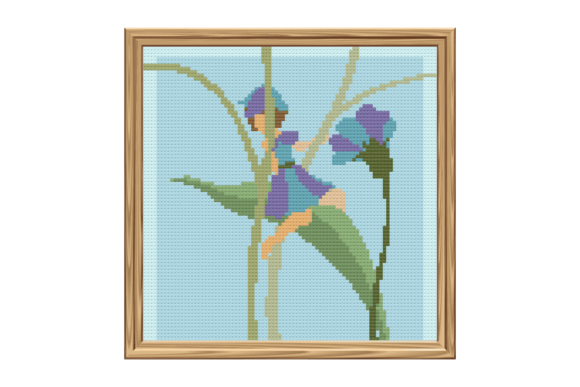
Vintage Pixie in the Meadow Cross Stitch Pattern
First Impression: Whimsical, Soft, and Instantly Recognizable
As an embroidery designer who’s curated over 200 craft fair booths—from Portland bazaars to Nashville maker markets—I know what stops a browser mid-aisle. Vintage Pixie in the Meadow Cross Stitch Pattern lands with quiet charm: not loud, not trendy, but deeply evocative. The title alone cues softness—“vintage,” “pixie,” “meadow”—and suggests cottagecore warmth, gentle storytelling, and handmade authenticity. It’s not minimalist or modern; it’s decorative with soul. Customers don’t just see stitches—they feel invitation. That emotional resonance is gold at craft fairs, where shoppers choose products that spark joy *before* they read the tag.
Where This Design Shines on Real Craft Fair Products
In my booth setup this season, I tested Vintage Pixie in the Meadow Cross Stitch Pattern across eight product types—and its versatility surprised me. On lightweight cotton tote bags? Perfect as a centered 4″–5″ focal motif: clear, legible, and romantic without overwhelming. On linen aprons? Even better—especially when placed just above the pocket, where the pixie’s delicate wings and floral border echo natural textile texture. For tea towel embroidery, it reads beautifully at 3.5″ tall, holding detail against subtle weave variations. As an embroidered patch? Yes—but only if stitched on medium-weight twill or denim; avoid flimsy felt or ultra-thin cotton where fine stems or tiny flower centers might blur.
It’s less ideal for curved surfaces like baseball caps (too many small interior details risk distortion) or dark fabric unless paired with high-contrast thread colors—so always test stitch density and thread visibility first. On small fabric pouches (4″ x 6″), it works best as a single centered motif—not scaled down, but thoughtfully cropped to highlight the pixie’s face and one signature bloom. Pillow covers? A standout when framed in a simple linen border, letting the design breathe. And for giftable handmade items—think mini hoop art or framed sampler cards—it becomes an instant conversation starter: “Is that *hand-stitched*?” (Yes—and it looks like it.)
Production Practicality: Clarity, Consistency, and Commercial Readiness
One of the strongest selling points of Vintage Pixie in the Meadow Cross Stitch Pattern is how quickly buyers grasp its appeal—even from three feet away. No decoding needed. The composition balances open space and detail, so it photographs exceptionally well for Etsy listings and printable mockups. Natural light shows off subtle color transitions; flat-lay shots pop against muted backdrops. That visual clarity translates directly to booth impact: customers spot it fast among busier designs.
For batch production, it’s highly repeatable—no gradients, no micro-lettering, no overlapping elements that demand repositioning per piece. But heed caution: dense stitch areas (like the pixie’s hair or layered petals) need proper stabilizer support on textured towels or slubby linen. And while the PDF instructions are straightforward, always confirm thread colors before cutting fabric—some palettes lean cooler or warmer depending on monitor calibration. If you’re using this as a machine embroidery design or digital embroidery file, verify that your software handles the stitch count comfortably; overly tight clusters can cause tension issues on home machines.
Smart Designer Notes Before You Produce
- Test on scrap fabric first—especially if working with terry cloth, heavy canvas, or brushed cotton.
- Check thread contrast on both light and dark base fabrics; some floral accents may vanish on navy or charcoal unless adjusted.
- Review spacing between elements—tight clusters near the pixie’s hands or stem bases benefit from slight simplification if stitching by hand at smaller scales.
- Confirm hoop size compatibility; if adapting for machine use, ensure the full motif fits within your standard hoop without re-hooping.
- Inspect stitch density in PDF charts—look for repeated symbols or ambiguous symbols that could slow hand-stitchers or confuse digitizers.
- Use the right stabilizer: tear-away for stable wovens, cut-away for knits or stretchy blends, and water-soluble for delicate overlays.
- Create at least one real mockup—not just a digital preview—so you can assess drape, scale, and tactile quality in person.
- Compare fabric colors side-by-side before committing to a full run; dye lots vary, and “ecru” on screen isn’t always “ecru” in hand.
- Confirm commercial licensing before selling finished products—this is critical for Etsy sellers, small shop owners, and boutique makers offering handmade goods.
Why This Design Strengthens Your Brand & Booth Presence
Vintage Pixie in the Meadow Cross Stitch Pattern doesn’t shout—it invites. That makes it powerful for brand consistency: whether you sell botanical-themed tea towels, storybook-inspired children’s apparel, or heirloom-style home goods, this pattern reinforces warmth, intentionality, and artisan care. In a crowded craft fair aisle, it stands out not through volume, but through voice. Customers linger. They touch the fabric. They ask about the story behind the pixie. That engagement lifts average order value—especially when paired with complementary items (e.g., matching embroidered pouch + tea towel set).
As a graphics-based Cross Stitch Patterns asset, it also scales beautifully across channels: use it in Instagram Reels showing the stitching process, feature it in email newsletters as “this month’s featured handmade motif,” or adapt it into a printable wall art download for your digital shop. Its timeless mood avoids seasonal expiration—making it a reliable small shop product year after year.
Final Thought: A Thoughtful Choice for Discerning Makers
This isn’t a flashy, algorithm-chasing design—and that’s precisely why it works. Vintage Pixie in the Meadow Cross Stitch Pattern speaks to buyers who value narrative, nuance, and handmade integrity. For craft fair sellers, Etsy sellers, and creative entrepreneurs building authentic connections, it’s more than a cross stitch pattern—it’s a quiet promise of beauty, care, and craft. Just remember: test, refine, and let the pixie guide your next best-selling handmade product.