Elephant 3 Appliqué Sewing Pattern
A Thoughtful First Impression for Boutique Apparel Designers
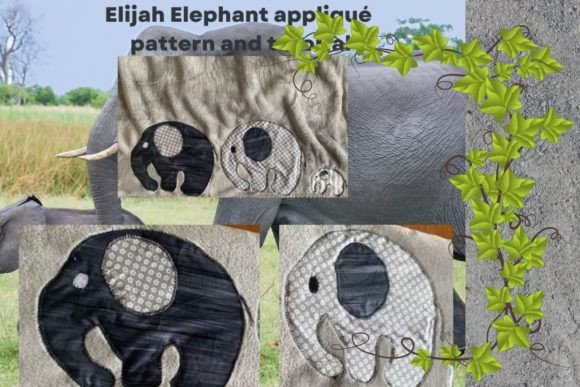
As an embroidery designer who’s developed collections for small clothing brands and Etsy sellers over the past decade, I opened the Elephant 3 Appliqué Sewing Pattern with quiet curiosity—not hype. What stood out immediately was its hand-drawn charm: three distinct elephant silhouettes—Elly, a relaxed trunk-down pose; a side-profile marcher; and a playful, upward-gazing calf—each drawn with gentle line weight and intentional negative space. This isn’t a machine-precise vector pack—it’s a Hand Embroidery Pattern designed for raw-edge appliqué, meaning it leans into texture, softness, and handmade warmth. Visually, it reads as playful yet grounded, cute without cloying, and whimsical but not childish. That balance makes it unusually versatile for boutique apparel—especially when you’re building a cohesive, lifestyle-aligned brand voice.
How It Performs Across Real Apparel Surfaces
I tested the Elephant 3 Appliqué Sewing Pattern across six garment types commonly used in small-batch collections: neutral heather sweatshirts, oatmeal hoodies, charcoal crewnecks, light-wash denim jackets, organic cotton tees, and canvas tote bags. On sweatshirt embroidery, the raw-edge finish softened beautifully against fleece’s nap—no harsh contrast, just gentle dimension. For hoodie design, the medium-sized elephants (roughly 3.5"–4.5" wide) landed perfectly on chest placement—visible but never overwhelming. One subtle win: the trunk curves and ear contours naturally follow the slight drape of ribbed knit, giving movement even in static photos.
On dark garments, contrast became critical. I paired deep-navy thread with ivory fabric backing—and found the design held visual clarity without needing dense fill stitches. That’s key for commercial embroidery efficiency: less thread, less time, more consistency across production runs. For sleeve accents or back designs, the smallest elephant worked elegantly—its simplified outline reads cleanly at 2.75", even on curved surfaces like shoulder seams. And on denim? The raw edges frayed *just enough* to feel intentional—not sloppy—especially after one gentle wash test.
Where Precision Matters Most
The Elephant 3 Appliqué Sewing Pattern shines in intentional simplicity—but that means thoughtful execution is non-negotiable. On stretchy fabrics like lightweight French terry or ribbed cuffs, I recommend basting the appliqué shape *before* final stitching to prevent puckering. Fleece and thick sweatshirt fabric require medium-weight cutaway stabilizer beneath—not tear-away—to support those gentle curves without distortion. And on curved areas (like hoodie hoods or tapered tote gussets), I traced each template onto lightweight fusible web *first*, pressed it gently, then stitched slowly with reduced presser foot pressure.
Crucially, this is a Graphics-category product—so it delivers clean outlines and interior stitch guides, not auto-digitized fills. That’s ideal for hand embroidery and beginner-friendly machine work—but if you’re planning high-volume machine embroidery design output, confirm whether your digitizer can easily interpret the PDF templates into optimized embroidery files. Also: check Creative Fabrica’s listing for exact template dimensions and recommended hoop size before scaling for large back designs or oversized garments.
Impact on Brand Identity and Customer Trust
For small shop owners and Etsy sellers, the Elephant 3 Appliqué Sewing Pattern does more than decorate—it communicates intentionality. Its handmade aesthetic signals care, craft, and authenticity—qualities buyers increasingly associate with trusted custom apparel. When styled thoughtfully (e.g., Elly centered on an oversized oatmeal hoodie, paired with minimalist cream thread), it elevates perceived value without raising price points. In lifestyle product photos, the elephants add narrative warmth—a quiet story of calm, memory, or gentle strength—that resonates across Instagram feeds and Pinterest boards.
That consistency also supports visual branding. Using just one of the three elephants across a capsule collection (e.g., Elly on hoodies, tees, and totes) creates instant recognition. Customers begin to associate that silhouette with your boutique brand, especially when paired with consistent thread colors and placement logic. It’s not flashy—but it’s memorable in the way quiet confidence is.
Practical Designer Notes Before You Stitch
- Always test on scrap fabric that matches your final garment’s weight, stretch, and texture—not just cotton muslin.
- Review thread color contrast under natural and artificial light; ivory-on-charcoal reads differently than on heather gray.
- Confirm hoop size compatibility early—some elephants extend beyond 4×4" boundaries depending on your chosen scale.
- Inspect stitch density in your digitized version: raw-edge appliqué benefits from secure perimeter stitching, but avoid over-stitching delicate curves.
- Compare placement options using printable mockups—small chest placement works for tees, but shift slightly higher for hoodies to account for front sag.
- Before selling finished apparel, verify licensing terms on Creative Fabrica—this digital embroidery file permits commercial use, but always double-check current policy for derivative products.
Final Thoughts for the Intentional Maker
The Elephant 3 Appliqué Sewing Pattern won’t shout. It doesn’t need to. What it offers instead is rare in today’s fast-pattern marketplace: quiet versatility, tactile integrity, and design intelligence that serves both maker and wearer. Whether you’re launching your first handmade product line or expanding a seasonal collection for your small shop product, these elephants bring grounded charm—not trend-chasing noise. They pair as easily with linen joggers as they do with cozy cable-knit cardigans. And because they’re built for raw-edge technique, they invite collaboration between hand and machine, beginner and pro, texture and tone. That’s not just utility—that’s signature style, thoughtfully stitched.