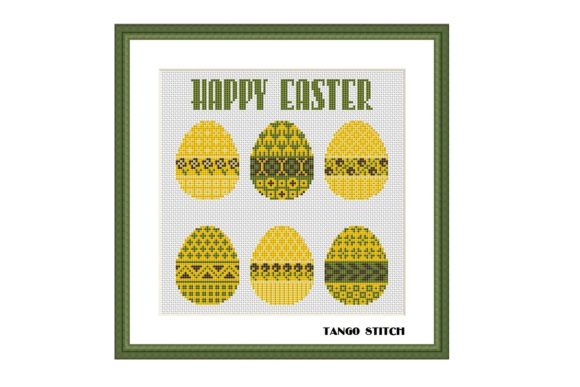
Happy Easter Ornament Eggs Cross Stitch
A Seasonal Designer’s First Impression
Opening Happy Easter Ornament Eggs Cross Stitch, I immediately felt its cheerful, lighthearted energy — a balanced blend of playful charm and quiet elegance. It doesn’t lean heavily into kitsch or overt religiosity; instead, it evokes springtime freshness, family tradition, and handmade warmth. The design features stylized eggs with subtle decorative motifs — think gentle swirls, soft dots, and clean outlines — all rendered in full cross stitches only. That simplicity is intentional and powerful: it reads clearly at small scales, holds up across varied fabric textures, and invites both beginners and seasoned stitchers to engage without frustration. As a seasonal embroidery designer, I see this as a versatile Cross Stitch Pattern that lands firmly in the “cozy-festive” zone — ideal for shoppers seeking heartfelt, non-generic holiday embroidery.
Where This Design Shines in Real Holiday Product Lines
Happy Easter Ornament Eggs Cross Stitch excels where clarity, emotional resonance, and quick production matter most. On sweatshirt embroidery, it reads beautifully on chest or sleeve placements — especially when stitched in soft pastel thread colors against heather gray or oatmeal fabric. For tote bag design, it adds just enough personality without overwhelming the canvas, making it perfect for Easter farmers’ markets or boutique gift sets. On kitchen towel embroidery, its balanced stitch density ensures durability through repeated washing while retaining visual charm. As a pillow cover motif, it brings gentle joy to living rooms and nurseries alike — and works equally well as an embroidered patch for denim jackets or Easter baskets.
For Etsy sellers and small shop owners, this design supports strong visual storytelling: pair it with printable mockups showing it on linen aprons, baby onesies, or wooden ornaments for cohesive listings. It’s highly effective in gift bundles — imagine three coordinating eggs (pink, mint, buttercup) stitched onto matching tea towels or mini hoop ornaments. Social media previews thrive with this pattern too: its clean lines translate crisply into Instagram carousels and Pinterest pins. And because it uses only full stitches, it’s reliably scalable for personalized gift offerings — add a name or year in a simple block font beneath the egg for heirloom appeal.
Smart Placement & Practical Limits
While flexible, Happy Easter Ornament Eggs Cross Stitch does require thoughtful application. Avoid using it at ultra-small hoop sizes (< 3 inches) unless you’ve tested legibility — tiny lettering or fine interior details may blur or vanish. On thick, napped fabrics like heavy terry cloth or dense quilting cotton, stitch density can cause puckering if stabilizer isn’t properly matched. Likewise, dark fabric demands careful thread color selection: test your chosen palette first — some pastels lose contrast on charcoal or navy. Metallic thread is best avoided here; the design’s charm lies in its hand-stitched authenticity, not shine.
Steer clear of high-stretch areas like curved baseball caps or ribbed knit cuffs — the rigid geometry of cross stitch doesn’t adapt well to distortion. Similarly, avoid placing it directly over seams or elasticated waistbands where tension shifts during wear or laundering. For machine embroidery design conversions, remember this is originally a digital embroidery file built for hand stitching — any automated adaptation requires redrawing stitch paths and confirming fill integrity. Always verify commercial licensing before selling finished products featuring this Graphics-based pattern.
How It Elevates Your Seasonal Strategy
This isn’t just another Easter motif — it’s a strategic asset. Happy Easter Ornament Eggs Cross Stitch strengthens seasonal embroidery collections by offering instant recognition without cliché. Shoppers scanning holiday markets or Etsy search results instantly grasp its purpose and mood — no decoding needed. That clarity builds customer trust: it signals craftsmanship, intentionality, and respect for tradition. When bundled with matching packaging or coordinated color palettes (think sage green + cream + blush), it boosts perceived product value and encourages upsells.
Its beginner-friendly nature also expands your audience: craft fairs see higher engagement when novices feel invited to try — and finish — a project. That translates directly to repeat buyers and social shares. For apparel decorators, it supports family matching items (mom’s apron, toddler’s bib, teen’s tote) with consistent tone and scale. And because it avoids dated trends, it supports brand consistency across years — you can reintroduce it alongside new designs without clashing visually or emotionally.
Designer Notes You Can’t Skip
- Test thread colors on both light and dark fabric — especially for online listings where color accuracy impacts returns.
- Check stitch density before scaling: tighter counts work on smooth cotton but may overwhelm textured linens.
- Confirm hoop size early — even small variations affect how the design fills space and interacts with borders or labels.
- Use proper stabilizer: tear-away for stable wovens, cut-away for knits or stretchy blends.
- Create realistic mockups — not just flat white backgrounds. Show it on actual fabric swatches, in natural light, styled with seasonal props.
- Review small details after stitching — especially corners and inner curves — to ensure no stray threads or misaligned stitches disrupt the clean look.
- Plan matching color palettes across product types: same thread tones on towels, patches, and pillow covers reinforce cohesion.
- Confirm commercial licensing before producing handmade gift inventory — especially for wholesale or Etsy resale.
In short, Happy Easter Ornament Eggs Cross Stitch is more than a pattern — it’s a ready-to-deploy seasonal engine. When applied with intention, it delivers emotional resonance, functional versatility, and quiet professionalism. For holiday product creators building meaningful, sellable collections, this Cross Stitch Pattern earns its place front-and-center — not as filler, but as foundation.