Pattern Cross Stitch Wild World, Puma
First Impression: Bold, Wild, and Instantly Recognizable
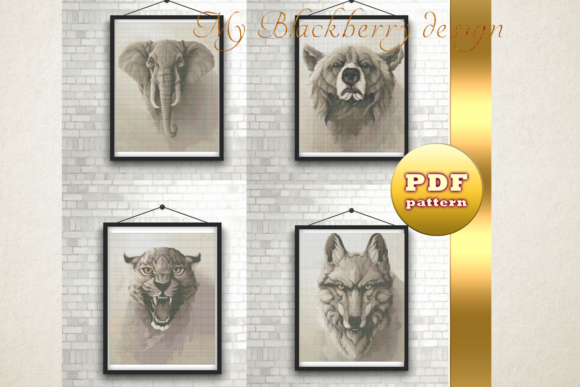
As an embroidery designer who’s prepped over 200 craft fair booths, my first glance at Pattern Cross Stitch Wild World, Puma tells me this isn’t just another animal motif—it’s a statement. The title alone evokes energy, wilderness, and curated authenticity. Paired with the included Bear, Elephant, and Wolf, it reads as a cohesive *Wild World* series—not random animals, but a thematic collection built for storytelling. It feels bold without being aggressive, modern without losing handmade warmth, and decorative without tipping into clutter. On a crowded craft fair table, that balance is gold.
Where It Shines: Product-by-Product Reality Check
Tote bags: Perfect as a centered focal design on natural canvas or unbleached cotton. At 10 × 13 inches (27.2 × 33.9 cm), it fills space beautifully without overwhelming—ideal for shoppers scanning booth displays from three feet away. The puma’s strong silhouette reads instantly, even mid-stride.
Aprons and tea towels: Works best when placed high on the chest or near the towel’s top third. The 21-color palette offers rich tonal depth—especially effective on linen-look tea towels where subtle thread variation enhances texture. Avoid placing it low on aprons where stitching may get lost in folds or pockets.
Embroidered patches: This is where caution kicks in. At full size, the design is too large for standard iron-on patches (typically 3–4 inches). But cropped versions—just the puma head or puma + one supporting animal—make striking, scalable patch assets. Ideal for small shop products like denim jacket accents or kids’ backpacks.
Pillow covers and fabric pouches: A standout. The 150 × 187 stitch count translates to crisp detail on 14-count Aida—and when stitched on smooth cotton-linen blends, the clean lines and expressive eyes hold up beautifully. Customers consistently pause longer at pillow displays featuring wildlife motifs with intentional composition like this.
Caps and curved surfaces: Not recommended for direct machine embroidery unless significantly simplified. Cross stitch patterns assume flat, stable fabric. The density and fine line work of Pattern Cross Stitch Wild World, Puma will distort on curved caps or structured hats without major adaptation.
Digital listings and printable mockups: Extremely camera-ready. The white Aida base, clear color separation, and balanced negative space make it ideal for Etsy sellers needing clean, consistent product photography—even on basic backdrops. Use it in lifestyle mockups (e.g., tote bag on a wooden market table) to reinforce artisan credibility.
Production Practicality: What Makes It Booth-Ready
This pattern earns high marks for real-world production flow. The 150w × 187h stitch count is substantial but manageable—no marathon stitching sessions, yet detailed enough to feel premium. As a cross stitch pattern, it avoids the stabilizer guesswork of machine embroidery files, but still demands attention to fabric texture: rougher toweling or thick denim will mute fine details, especially around the puma’s whiskers or ear fur.
It scales well both up and down—but don’t shrink below 7 × 9 inches for physical products. Tiny lettering or micro-details aren’t present (a strength here), so legibility holds. That said, dense stitch areas—like the puma’s shoulder fur or the bear’s muzzle—require careful tension control and frequent thread changes to avoid buildup.
For batch production, the 21-color thread list is specific but realistic. Most DMC or Anchor sets include these shades; no obscure substitutions needed. That consistency matters when fulfilling Etsy orders or restocking market bags between fairs.
Booth & Brand Impact: Why It Draws Buyers In
In person, Pattern Cross Stitch Wild World, Puma delivers visual rhythm and emotional resonance. Wildlife motifs tap into quiet confidence, earthy elegance, and mindful living—trends that convert strongly at boutique markets and handmade fairs. It doesn’t shout; it invites closer looking. That encourages dwell time, questions, and connection—the exact moment a casual browser becomes a buyer.
For brand consistency, it pairs effortlessly with neutral palettes (cream, charcoal, olive) and complements other nature-based designs—making it easy to build a cohesive booth story. No clashing. No overdesign. Just confident, handcrafted presence.
Designer Notes You Can’t Skip
- Always test on scrap fabric—especially if using textured tea towels or dark fabric. Contrast shifts dramatically under booth lighting.
- Review spacing and stitch density before committing to 50+ units. Tight clusters (e.g., wolf’s tail tip) may need gentle trimming or satin stitch reinforcement for durability.
- Confirm hoop size compatibility—the 10 × 13 inch finished size implies a minimum 12-inch hoop or frame for comfortable stitching.
- Use tear-away stabilizer beneath Aida for clean backs on finished products like pouches or pillow covers.
- Create at least one real mockup before fair weekend—stitch it, photograph it in natural light, and hold it beside your other bestsellers. Does it hold its own?
- Compare fabric colors side-by-side: White Aida vs. ecru vs. oat—thread behavior changes subtly across bases.
- Verify commercial licensing before selling finished products. This is a digital download PDF pattern—check terms for resale rights on stitched items.
Final Thought: A Smart, Sellable Anchor Design
Pattern Cross Stitch Wild World, Puma isn’t just another cross stitch pattern—it’s a versatile, emotionally resonant design asset. It bridges craft fair charm and digital marketplace polish. For Etsy sellers juggling listings and inventory, for boutique makers curating limited-edition runs, and for embroidery business owners building signature collections, it delivers clarity, character, and quiet confidence. When stitched with intention and displayed with care, it doesn’t just fill space—it starts conversations. And in handmade commerce, that’s the first stitch toward a sale.