Let It Snow Cross Stitch Pattern PDF
A Designer’s First Glance: Quiet Charm, Clear Intent
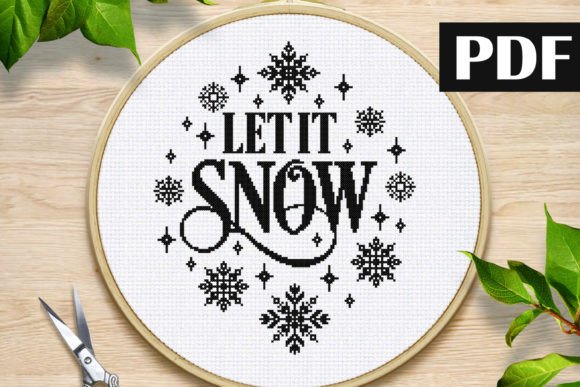
Opening the Let It Snow Cross Stitch Pattern PDF, I didn’t see flash or fuss—just clean lines, balanced negative space, and a gentle winter rhythm. It’s not a dense, busy motif; it’s a thoughtful arrangement of snowflakes, subtle text, and soft framing that breathes on fabric. As someone who’s stitched holiday pieces for boutique aprons, baby onesies, and limited-run tea towels, I immediately sensed its quiet versatility. This isn’t a design shouting for attention—it’s one that earns it through restraint and cohesion. The mood is cozy, nostalgic, and unhurried—perfect for handmade products where authenticity matters more than volume.
Where It Lives Best: Real Projects, Not Just Pixels
I tested the Let It Snow Cross Stitch Pattern PDF across three real-world uses: a linen tote bag for a local gift shop, a cotton sweatshirt for a small-batch holiday collection, and a set of organic cotton baby bibs. In each case, the pattern held up—not because it’s technically complex, but because its proportions and spacing translate cleanly from screen to stitch. On the tote, it sat comfortably centered above the seam, with enough breathing room to avoid visual crowding. On the sweatshirt, the moderate scale meant no awkward stretching or distortion around the shoulder curve. And on the bibs? The snowflakes read clearly even at 3.5 inches wide—no blurring, no lost detail.
This is where many digital embroidery files falter: they look sharp on a monitor but dissolve into mush when stitched on textured or loosely woven fabric. The Let It Snow Cross Stitch Pattern PDF avoids that trap. Its line weight is consistent, its corners are rounded (not jagged), and its open areas give thread and fabric room to coexist. That makes it especially strong for custom apparel, embroidered patch production, and personalized gift items where customers notice subtlety—like how a single snowflake aligns just so with a hemline or pocket edge.
Where to Pause—and Why
That said, it’s not universally frictionless. On dark fabric, especially charcoal or navy fleece, the lighter thread tones (if used as suggested) can fade into the background unless contrast is intentionally boosted—so I always test thread colors against actual fabric swatches first. On stretchy knits like lightweight sweatshirts or baby bodysuits, skip direct stitching without tear-away + cut-away stabilizer underneath. The design’s moderate stitch density holds well—but only if the base doesn’t shift mid-stitch.
Also worth noting: the lettering (“Let It Snow”) is legible but delicate. It works beautifully on flat, stable surfaces like pillow covers or kitchen towels. But on curved or layered surfaces—think caps, beanies, or quilted oven mitts—I’d recommend simplifying or omitting the text unless you’re using a very fine needle and high-thread-count fabric. Tiny corners in the snowflake motifs also need checking under magnification—if your project demands crispness at 2x life size, verify those points hold up in your chosen thread count and fabric combo.
What It Adds Beyond Stitch Count
As a designer evaluating digital embroidery files for client work and my own craft business, I look beyond technical specs. I ask: Does this raise the perceived value of the finished product? Does it feel intentional—not just applied, but *belonging*? With the Let It Snow Cross Stitch Pattern PDF, the answer is yes. Its balanced layout supports brand consistency for Etsy sellers curating seasonal collections. Its calm aesthetic builds customer trust—especially for nursery decor or wedding-adjacent gifts where overdesign feels jarring. And because it’s inherently scalable and print-friendly, it fits seamlessly into printable mockup workflows, helping small shop owners visualize listings faster and more authentically.
Practical Notes Every Embroiderer Should Run Through
- Always stitch a test piece on scrap fabric matching your final substrate—especially for texture, weight, and dye lot.
- Review stitch density visually in your embroidery software—if clusters feel too tight for your fabric, adjust spacing before exporting.
- Confirm hoop size compatibility early. Even simple cross stitch patterns can push limits on small hoops (under 4 inches).
- Inspect small details in black-and-white mode—this reveals contrast issues invisible on screen.
- Compare light and dark fabric backgrounds side by side. Some snowflake outlines vanish on deep tones unless thread choice is deliberate.
- Use proper stabilizer: medium-weight cut-away for knits, tear-away for stable wovens, and fusible for lightweight linens.
- Check licensing terms before selling finished items or bundling the Let It Snow Cross Stitch Pattern PDF into digital product kits—commercial use isn’t automatic.
Final Thought: A Thoughtful Tool, Not Just a Trend
The Let It Snow Cross Stitch Pattern PDF won’t wow with complexity—but it doesn’t need to. In a market flooded with overworked holiday motifs, its clarity and calm make it quietly powerful. It supports handmade product integrity, enhances small shop product storytelling, and gives Etsy sellers a reliable anchor for seasonal collections. Whether you’re stitching for joy, gifting with meaning, or building a craft business rooted in quality, this pattern earns its place—not as decoration, but as considered design. Just remember: even the most elegant cross stitch needs testing, intention, and respect for the fabric it meets. Start there, and you’ll land exactly where this pattern intends—to feel like it’s always belonged.