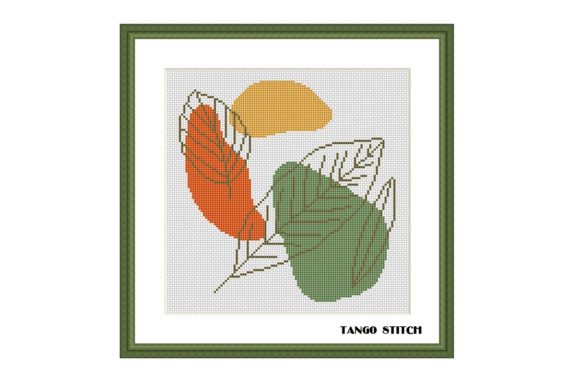
Abstract Leaves Cross Stitch Pattern
A Thoughtful First Impression for Apparel Designers
As an embroidery designer who’s developed collections for boutique apparel brands and seasonal lifestyle lines, my first glance at the Abstract Leaves Cross Stitch Pattern landed with quiet confidence—not flashy, but unmistakably intentional. It’s not a literal botanical illustration; it’s stylized, rhythmic, and balanced—leaves rendered in clean, full cross stitches that flow like a breath rather than a rigid grid. The visual personality leans gently feminine and modern, with a whisper of Scandinavian minimalism and a touch of playful asymmetry. It feels cute without being cutesy, artistic without being intimidating, and handmade without looking amateurish. That subtle tension—between structure and softness—is exactly what makes this design work so well on apparel where authenticity and polish must coexist.
Why This Pattern Fits Boutique Sweatshirt & Hoodie Collections
I tested the Abstract Leaves Cross Stitch Pattern across several garment types: heather grey French terry sweatshirts, oatmeal oversized hoodies, deep navy fleece pullovers, and even lightweight organic cotton tees. On neutral bases, it reads as refined and intentional—ideal for slow-fashion branding or mindful lifestyle shops. On pastel hoodies (think blush, mint, or lavender), the pattern gains warmth and approachability, especially when stitched in tonal ecru or sage thread. Against dark garments, high-contrast thread—like charcoal grey on black fleece—makes the leaf forms pop with elegant definition. What stands out is how gracefully it adapts to scale: sized down for chest placement (3.5–4.5 inches wide), it anchors a hoodie with quiet authority; enlarged for back designs, it becomes a focal point that invites closer inspection without overwhelming the garment’s drape.
Real-World Placement & Fabric Considerations
This isn’t a one-size-fits-all motif—and that’s its strength. For sweatshirt embroidery, I recommend placing the Abstract Leaves Cross Stitch Pattern slightly off-center on the left chest to avoid seam interference and allow natural fabric relaxation. On ribbed fabric or stretchy knits, stabilizer choice is critical: a medium-weight cutaway works best under the hoop to prevent puckering around the leaf stems. On fleece or heavy terry, reduce stitch density by 5–10% if your machine allows—though since this pattern uses only full stitches (no fractional or backstitch detail), it inherently avoids overloading dense areas. Avoid tight curves like sleeve cuffs unless you resize it significantly smaller—this design thrives on open, stable surfaces: chest, back yoke, or tote bag center panels.
Sleeve accents? Possible—but with restraint.
A single small leaf (scaled to ~1.75") works beautifully on the upper bicep of a relaxed-fit hoodie, especially when paired with matching thread on the pocket edge or hem. Just confirm hoop size compatibility first—the original Creative Fabrica file likely assumes standard 4x4 or 5x7 hoops, common for most commercial embroidery setups.
Performance Beyond Garments: Totes, Mockups & Marketplace Appeal
The Abstract Leaves Cross Stitch Pattern translates exceptionally well to lifestyle merchandise. On canvas totes, it reads cleanly at 5–6 inches wide—balanced, uncluttered, and instantly recognizable in product photos. For printable mockups and social media graphics, its strong silhouette holds up even at thumbnail size, making it ideal for Etsy listings where scroll-stopping clarity matters. As a digital embroidery file, it supports cohesive brand storytelling: imagine using it across sweatshirts, matching tote bags, and limited-run denim jackets—all unified by the same organic rhythm. That consistency builds buyer trust: customers begin to associate the leaf motif with your boutique’s aesthetic—thoughtful, tactile, quietly confident.
Design Integrity Meets Commercial Practicality
What elevates this beyond a decorative graphic is its functional intelligence. Because it relies solely on full cross stitches, it avoids the thread tension pitfalls common in satin-stitched florals or fine-detail machine embroidery. There’s no risk of skipped stitches on textured fabrics like loopback fleece or brushed cotton. And since it’s categorized under Cross Stitch Patterns and Graphics, it’s optimized for both hand and machine workflows—meaning you can offer matching DIY kits alongside finished apparel, expanding your small shop product range.
Essential Designer Notes Before Production
- Always test on scrap fabric that matches your final garment’s weight, texture, and stretch—even if it’s the same brand. Fleece behaves differently than French terry, even when labeled identically.
- Review thread colors thoughtfully: ecru, olive, charcoal, and dusty rose all reinforce different brand moods. Avoid pure white on light heathers—it can look harsh instead of crisp.
- Confirm hoop size and stitch density in the Creative Fabrica file details. If unstated, assume standard density for medium-weight fabrics and adjust manually for fleece or ribbing.
- Compare placement options digitally first—use your embroidery software to preview how the Abstract Leaves Cross Stitch Pattern aligns with seams, pockets, and garment grain.
- Double-check licensing terms before selling finished apparel. Creative Fabrica’s commercial use permissions vary by vendor—verify whether this Creative Fabrica embroidery file permits unlimited end-product sales.
Final Thoughts for Small Creative Businesses
If you’re curating a capsule collection of custom apparel for your boutique brand—or building a signature line for your Etsy shop—the Abstract Leaves Cross Stitch Pattern offers rare versatility: it’s beginner-accessible enough for in-house stitching teams, yet distinctive enough to elevate your handmade product above generic stock motifs. It doesn’t shout—it resonates. And in today’s market, where customers seek meaning, texture, and intention behind every stitch, resonance is what converts browsers into loyal buyers. Whether you’re launching a spring hoodie drop or refreshing your core tote bag offering, this pattern earns its place—not as filler, but as foundation.